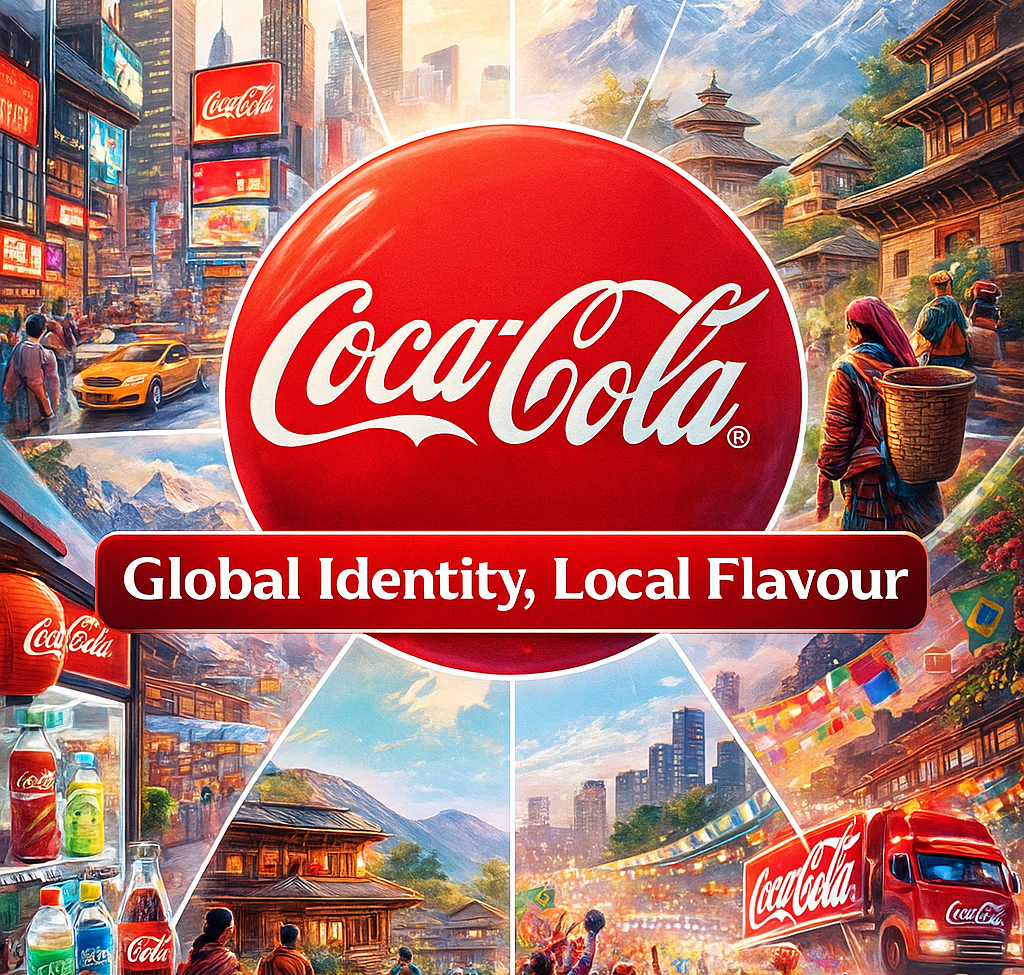
When a Brand Speaks Every Language: Coca-Cola’s International Strategy

Few brands in the world can claim to be as universally recognisable as Coca – Cola. From the
bustling streets of New York to the remote villages of Nepal, the familiar red-and-white logo is a
symbol that transcends language, culture and geography. But what allows Coca-Cola to speak
every language? The answer lies in a very careful and deep international strategy that combines
global consistency with local adaptation.
Global Identity, Local Flavour
At the heart of Coca-Cola’s success there’s its ability to maintain a strong global identity, but
always respecting local tastes and traditions. The company’s classic logo, the fit, and the colour
scheme remain consistent across various markets, ensuring instant recognition. Nevertheless,
Coca-cola also tailors its marketing campaigns, product lines and even formulas to suit regional
preferences.
For instance, in Japan Coca-Cola has launched over 100 unique beverage variations – from green
tea taste to sparkling water – catering to the country’s different palate. In addition, in India the
company promotes smaller, more affordable packaging to make its items accessible to a wider
range of consumers. Meanwhile, in South America, Coca-Cola has become deeply embedded in
local festivities and sports sponsorships, reinforcing its emotional connections with communities.
Sustainability and Social Impact
In recent years, Coca-Cola has also demonstrated that speaking every language means
addressing global concerns: the company has made sustainability a central pillar of its strategy,
committing to “World Without Waste” – a plan to collect and recycle one bottle or can for every
one it sells by 2030. In many countries, Coca – Cola works with local organisations to improve
recycling systems and provide clean water access, becoming the spokesperson for a more
sustainable world.
Emotional Branding and Storytelling
One of Coca – Cola’s greatest strengths is its leadership in emotional branding. The company sells
happiness, togetherness and nostalgia, not just a sparkling drink. Among iconic campaigns
launched over the years, such as “Share a Coke” or the heartwarming Christmas advertisements
featuring Santa Claus and the Coca – Cola truck, the company has crafted universal stories that
resonate across generations and different backgrounds.
These campaigns are often localised to reflect national identities – for example, featuring local
celebrities or translating the names on bottles in native languages. In so doing, Coca – Cola
ensures that the emotions behind the ad message remains global, while the expression of it
sounds local, personal and intimate.
Innovation and Digital Presence
Coca – Cola’s global reach has also been strengthened by its skill to embrace innovation and
technology, two main elements in today’s era. The brand has adapted to the digital age by
engaging consumers through social media, personalised content, interactive and digital
marketing. Whether it’s augmented reality experiences, influencer collaborations or data-driven
campaigns, Coca – Cola continues to evolve with consumer behaviour, creating a long – lasting
bond over time.
In markets like China, for instance, the company has partnered with digital platforms, such as
WeChat, to offer mobile promotions and cashless payments to make the brand journey more
integrated and accessible. This technological way of doing approach ensures that Coca – Cola
remains at the top of an increasingly digital connected world.
The Secret Recipe for Global Success
Coca – Cola’s international strategy is not only about selling beverages – but it’s also about selling
a feeling of connection. By balancing a unified global image with respect for local cultures and
communities, the brand has built a powerful and adaptable identity that, nowadays, few
competitors can reach.
In a world where communication can easily get lost in translation, Coca – Cola has found the
formula, or rather the perfect balance, to speak fluently to everyone – not through words, but
through shared experiences and emotions.



Well done