Rethinking inflation – learning from the supply shock decade

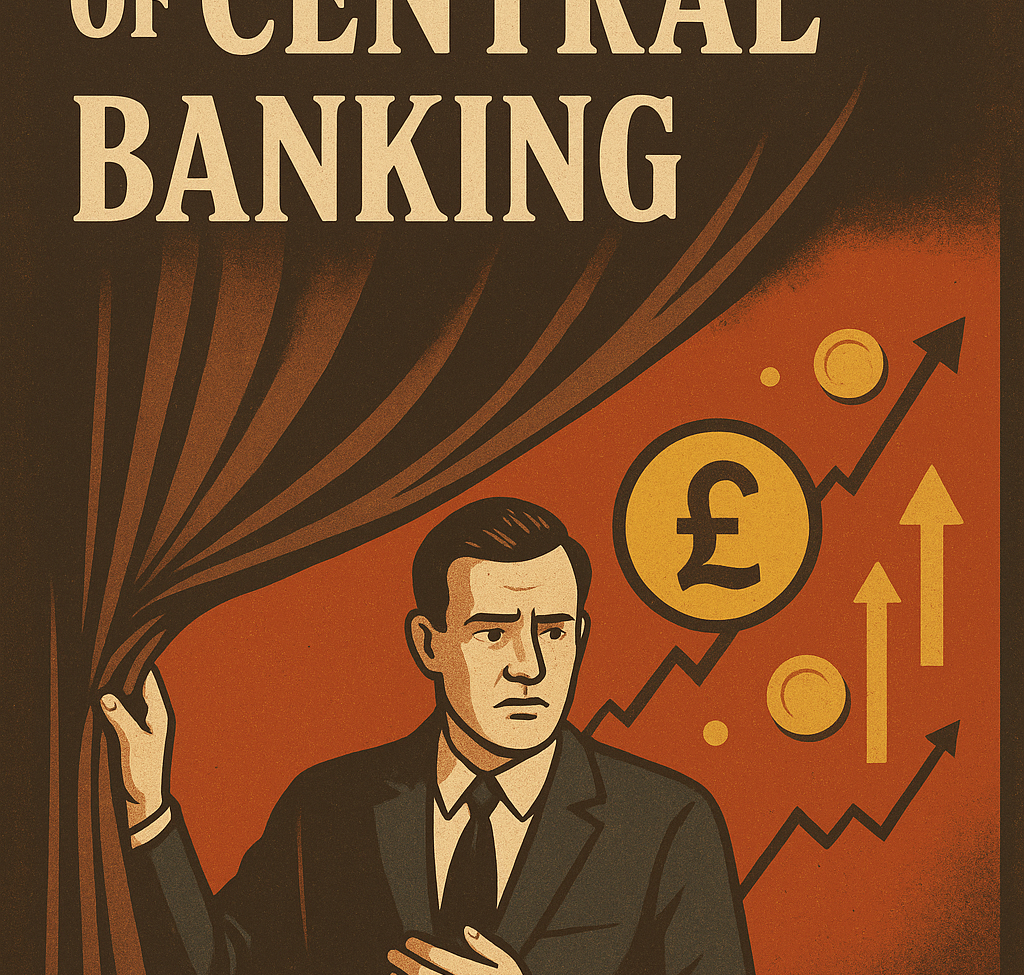
For decades, central banks were seen as the maestros of modern economies, omnipotent guardians of stability capable of managing growth, employment, and inflation through the use of interest rates. But the past few years have pulled back that illusion, revealing a more complicated reality. Much like the moment in The Wizard of Oz when the curtain is pulled back to reveal the great wizard as merely an ordinary man, the pandemic years have exposed central banks as far less omnipotent than once believed.
For ages, classic monetary policy relied on a simple rule: when output rises, inflation follows. The output gap, the difference between actual and potential output, has long guided policymakers, helping them predict inflation and respond accordingly. A positive output gap, when the economy produces above its potential, typically means upward pressure on prices, while a negative gap suggests disinflation.
The post-pandemic economy has challenged this framework, undermined the so-called “divine coincidence”, the belief that stabilising output would automatically keep inflation under control . In fact, in the aftermath of the pandemic, inflation surged to levels not seen in decades despite negative output gaps, revealing what economists now call a “decoupling” of inflation from traditional macroeconomic indicators.
As the Financial Times recently put it, the pandemic exposed “the limits of central banking”. It was a shock that monetary policy simply could not control. Policymakers have been long trained to view inflation as a symptom of excess demand, something that could be tamed by influencing aggregate demand through the fine-tuning of interest rates. To cool the economy, rates rise and borrowing becomes more expensive, slowing consumption and investment. When rates fall, credit flows and demand increase.
COVID-19, followed by Russia’s invasion of Ukraine, and global energy crises, turned that old logic upside down. This time, inflation didn’t come from booming demand but from broken supply chains (restricted production), energy shortages (rising costs), and geopolitical disruptions. Raising interest rates can cool demand, but it won’t reopen factories or lower oil prices.
To tackle this situation, governments injected massive fiscal stimulus packages to support households and businesses. The result was the perfect inflation storm: demand outpaced supply, too much money chasing too few goods, leaving central banks unprepared for the challenge and facing an unfamiliar enemy resistant to their traditional tools. As highlighted by the Bank of England, supply-driven inflation acts differently: while demand-driven surges tend to fade quickly, negative labour or productivity shocks can keep inflation elevated for years.
The Federal Reserve, the European Central Bank (ECB), and the Bank of England were slow to recognize that inflation was not “transitory”, and the credibility of these institutions took a serious hit. By the time central banks began raising rates, inflation had already peaked at 9.1% in the United States, 11.1% in the United Kingdom, and 10.6% in the Eurozone. As the recent Financial Times article noted, these shocks taught a painful lesson: not all inflation behaves the same. When inflation is driven by supply disruptions rather than excess demand, the old tools of monetary policy are no longer sufficient.
For most of the 1990s and 2000s, globalization was their silent ally. Cheap manufacturing from China and integrated global supply chains kept prices low, allowing inflation to stay stable with minimal effort. As discussed in the Brookings Papers on Economic Activity (BPEA) conference, “Changing Central Bank Pressures and Inflation” by Pierre Yared, Hassan Afrouzi, Marina Halac, and Kenneth Rogoff, the four decades before the pandemic were exceptional: International trade grew from 25% to 61% of global GDP between 1970 and 2008. Globalization, and independent, inflation-targeting central banks became the norm. But these trends are now fading.
Trade openness has stalled. Geopolitical tensions, from conflicts in Ukraine and the Middle East to US-China rivalry, are encouraging protectionist and nationalistic policies, making goods more expensive. Meanwhile, pandemic spending, an ageing population, and the cost of green transition, such as carbon taxes and environmental regulations, have boosted public debt, adding further inflationary forces . As Bloomberg Originals noted, “The globalization tailwind for disinflation is turning into a deglobalization driver of higher prices.”
The Brookings paper warns that these developments will “increase pressures on central banks to inflate”, unless independence is strengthened or fiscal policy becomes more credible. In other words, the low-inflation environment of the 2010s may have been an exception rather than a rule.
At the 2023 ECB Forum in Sintra, economist Silvana Tenreyro addressed this challenge. In her paper “Heterogeneity and Monetary Policy in a World of Supply Shocks”, she showed how conventional rate hikes often do more harm than good when inflation is cost-push rather than demand-pull, depressing output and employment without necessarily stabilising prices. Instead, she emphasizes managing expectations and improving coordination between monetary, fiscal, and structural policies.
This challenge is compounded by a contemporary monetary paradox. After years of ultra-low rates, central banks have regained some “room to maneuver”, but higher rates also means higher debt-servicing costs for governments, creating political pressure to accommodate inflation rather than fight it. The ECB must navigate a complicated and fragmented landscape, including diverging fiscal positions across member states, unstable energy markets, and a political context that sometimes questions its authority.
So where does this leave central banking? The answer may lie not in discarding old tools, but in broadening the policy toolkit. Modern inflation is often driven by supply shocks, and the uncomfortable truth is that monetary policy alone cannot fully control it. As the Financial Times notes, central banks will need to coordinate more closely with fiscal authorities without sacrificing independence. Future stability will require deeper cooperation with fiscal and structural policies, including energy investment and labor market reform.
As Bloomberg Originals put it, “The problem is not that central banks lost their magic, it’s that we expected them to be magicians”. The real challenge now is managing inflation in a fragmented global economy. The pandemic has ended a long era of predictability; the rules that once guided monetary policy no longer hold in the same way. Perhaps it’s time to stop viewing central banks as solitary wizards behind the curtain, and start seeing them for what they truly are: fallible, constrained, yet indispensable in guiding the global economy through an age of uncertainty.