how the Kardashians built a billion-dollar influence machine

What began as a reality television experiment in the late 2000s has evolved into one of the most sophisticated influence-driven business ecosystems in contemporary media. The Kardashian–Jenner family did not simply become famous; they transformed fame into a scalable economic system, converting visibility into infrastructure and attention as a long-term value. Their trajectory illustrates how influence functions as capital in the digital economy.
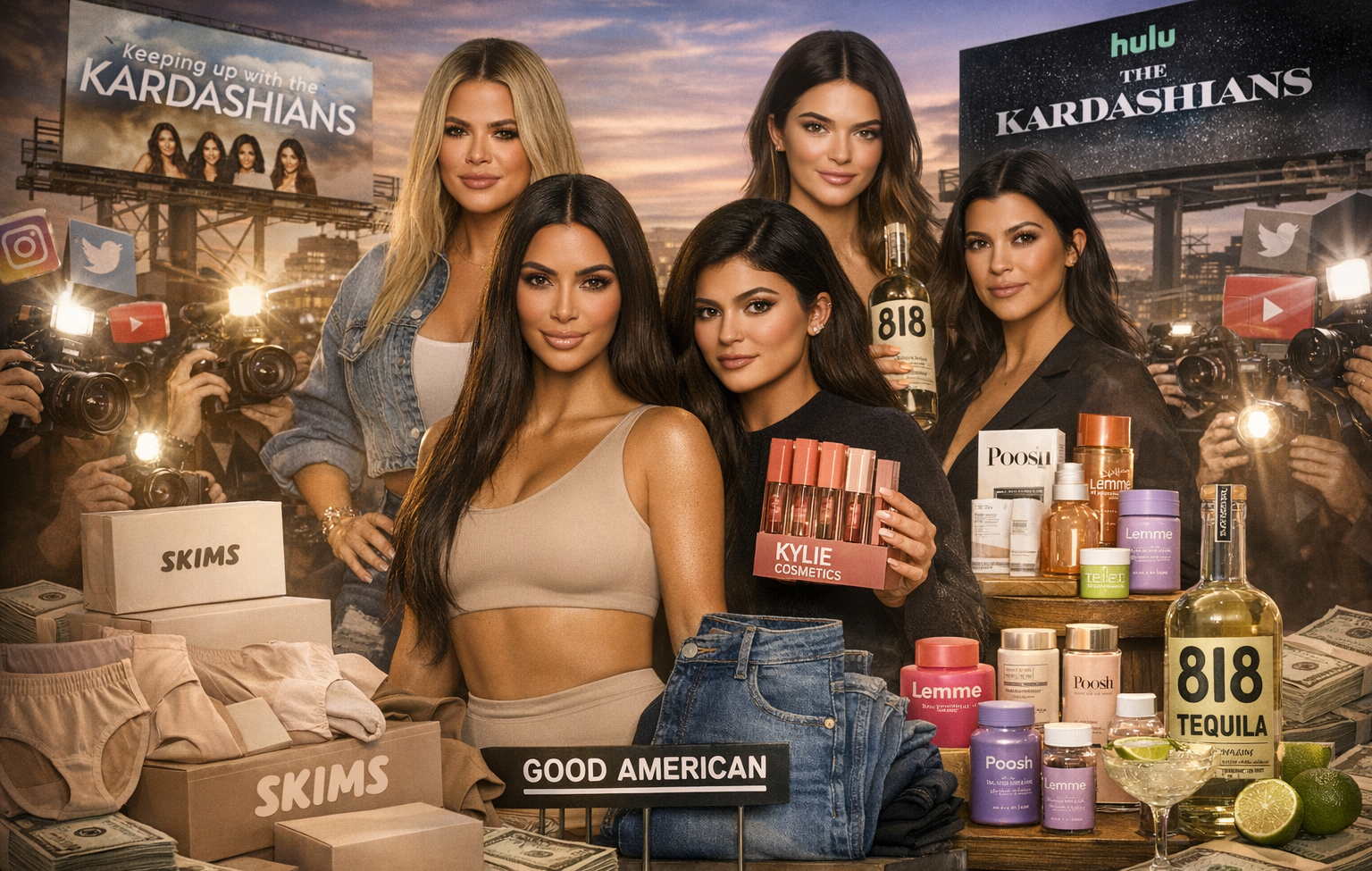
The launch of Keeping Up with the Kardashians in 2007 marked the first layer of this system. More than entertainment, the show created a constant flow of content that kept the family permanently visible and emotionally familiar to audiences. Viewers were not just spectators but long-term participants in an unfolding narrative of relationships, conflicts, reinventions, and growth. When the show ended in 2021, its conclusion did not signal a loss of relevance but a strategic transition: in fact, the family quickly migrated to a new format with The Kardashians on Hulu, demonstrating that the television product itself was interchangeable. What mattered was not the network or the format, but the ability to maintain narrative continuity and audience attention across platforms.
This continuity allowed the family to move beyond traditional celebrity monetization. Early endorsement deals and licensed products generated revenue but offered little long-term control. Over time, the Kardashians shifted decisively toward ownership, building brands in which they retained equity, creative direction, and strategic authority. This shift marked the transformation of influence from a promotional tool into a durable business asset.Here there are some examples on how they built an empire with some of their brands all over the years; not every single one of them has been successful but the following ones are the most remarkable and known in this decade.
Kim Kardashian’s SKIMS exemplifies this evolution. Launched in 2019, SKIMS entered a saturated shapewear market and succeeded by redefining the category. Instead of promoting restrictive, idealized body standards, the brand focused on inclusivity, comfort, and everyday functionality. Extended sizing, diverse nude tones, and minimalist design reflected both cultural shifts toward body positivity and Kim Kardashian’s own public narrative around body scrutiny. While her fame provided initial visibility, SKIMS’ growth has been driven by repeat customers, wholesale partnerships, and expansion into adjacent categories such as loungewear and menswear. The brand’s multibillion-dollar valuation highlights how influence can serve as a starting advantage without remaining the core value proposition.Khloé Kardashian’s Good American offers another example of influence translated into long-term brand equity. Co-founded in 2016, the brand emerged directly from Khloé’s public narrative around body image and self-acceptance. Instead of distancing herself from criticism, she embedded inclusivity into the company’s core identity, launching with an unprecedented size range and emphasizing fit across diverse body types. This authenticity resonated with consumers and allowed Good American to grow beyond denim into a broader lifestyle brand, demonstrating how personal storytelling can be converted into commercial legitimacy.
Kylie Jenner’s Kylie Cosmetics illustrates the speed and scale that influencer-led commerce can achieve. Launched in 2015 with the now-famous Kylie Lip Kits, the brand relied almost entirely on social media rather than traditional advertising. Kylie’s direct relationship with her followers enabled product launches to sell out within minutes, proving that personal platforms could function as complete distribution systems. While the brand later underwent restructuring and partial ownership changes, Kylie Cosmetics remains a landmark case in direct-to-consumer beauty, highlighting how influence can collapse the distance between marketing and sales.Kourtney Kardashian, on the other hand, has applied a different but complementary approach through Poosh and Lemme, focusing on content-driven wellness. Poosh began as a lifestyle and wellness platform, prioritizing editorial content over immediate product sales. By building authority through articles, interviews, and curated recommendations, Kourtney established credibility in the wellness space before expanding into commerce. This content-first strategy laid the groundwork for Lemme, her supplement brand, which positions itself around clean ingredients, transparency, and everyday health routines. Together, Poosh and Lemme demonstrate how influence can be leveraged more subtly, using education and curation to build trust before monetization.
Finally, Kendall Jenner’s 818 Tequila extends the Kardashian influence model into the spirits industry. Entering a competitive and regulation-heavy market, 818 adopted a lifestyle-oriented, premium positioning that minimized overt celebrity branding. Kendall’s visibility provided initial awareness, but the brand emphasized quality, awards, and experiential marketing to gain legitimacy. This approach reinforced the broader Kardashian strategy: influence opens doors, but sustained success depends on product credibility and brand coherence.Across all these ventures, social media functions as the connective infrastructure. Platforms like Instagram operate as hybrid spaces where personal storytelling, brand communication, and commerce converge. Product launches, behind-the-scenes content, and moments of personal vulnerability coexist within the same digital ecosystem, reducing reliance on traditional advertising while maintaining constant proximity to consumers.Equally important is the family’s management of visibility and controversy. Personal narratives—ranging from public criticism to discussions of motherhood, mental health, and self-image—are integrated into brand positioning without overwhelming it.
The Kardashians practice controlled transparency, using authenticity to build trust while maintaining strategic distance. Even moments of backlash often feed into renewed attention, which the family has learned to redirect toward business growth rather than reputational decline.Over time, the Kardashian–Jenner empire has come to resemble a diversified brand portfolio rather than a single celebrity enterprise. Each venture targets a distinct market while benefiting from a shared ecosystem of attention, data, and cultural relevance. This structure reduces dependency on any single platform, trend, or individual and allows the family to adapt quickly as media and consumer behaviors evolve.
Ultimately, the Kardashians’ success lies in their ability to industrialize attention. By treating fame as a renewable resource and pairing it with ownership, operational discipline, and strategic storytelling, they built an influence machine capable of generating sustainable value. Their model demonstrates that in the contemporary media economy, visibility alone is fleeting, but when transformed into infrastructure and equity, influence can become enduring economic power.